
"snow top"
800 article(s) found

Flavor description of Salvadoran coffee beans introduction to the grinding scale of the treatment method in the manor area
The flavor description of Salvadoran coffee beans the grinding scale of the processing method in the manor region introduces that the rarest coffee beans on the market in Ethiopia are Yirgachaffe coffee beans, which are exported to Japan and Europe, but are rarely seen in the United States. This is because Dallmeyer, the German coffee roaster owned by Nestle, is the same company.

Introduction to the characteristics of Kilimanjaro Coffee Flavor Manor with round taste
The national emblem of Tanzania was formulated in 1964 on the basis of the Tanganyika national emblem. The central shield, the national emblem of Tanzania, is divided into four parts: the top burning torch cuts through the pre-dawn darkness and lights the spark of freedom and hope; it is painted with the flag of Tanzania; there are crossed tomahawks and spears on the red ground below; and finally, India.

Introduction to the flavor difference between Ethiopian Yejasuefei and Sidamo coffee beans
The flavor difference between Ethiopian Yegashifi and Sidamo coffee Ethiopia Washed Yirgacheffe is the top washed coffee in Ethiopia, the country of origin of coffee, which has the characteristics, high quality and low yield, so it has the factor of top coffee and is naturally very popular. Yega snow coffee is almost synonymous with the best coffee in Ethiopia!
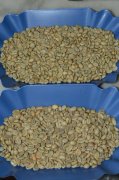
Sun Yega Chuefei G1 VS Solar Yega Xuefei G3
As a Yega Xuefei control, there must be Beloya Yega Xuefei on the bean list, and the G3 grade of the Ecx batches that arrived this year (G3 is the highest level of sun-dried beans in the Ethiopian grading system, and G1d2 grade is assigned to washed raw beans), which is already amazing, unexpectedly, there is an abnormal Beloya Kochere cooperation.

Introduction to the flavor and taste characteristics of Tanzania coffee manor with unique cocoa fruit aroma
The coffee beans are of extraordinary quality and are produced in the Mohi district near Mount Kilimanjaro. The mountain area with a height of 3,000 to 6,000 feet is the most suitable area for growing coffee. Fertile volcanic ash gives the coffee here a strong texture and soft acidity. It exudes delicate aromas and contains aromas of wine and fruit, leaving no aftertaste.

Introduction to the flavor description method of Ethiopian Yejia Coffee Cochel Coffee
Ethiopian Yejia Coffee Coffee Flavor description treatment Variety characteristics introduction: in 1959, the Yega Snow Coffee producing area began to try the water washing method. After 1970, the jasmine scent of Yega was washed, and the lemon and citrus flavor was popular in Europe and America. It has become a model of fine African beans, and the sun treatment is gradually drifting away from Shifei. However, there will always be people who will miss the wonderful wine in the sun.

Introduction to the Flavor and taste of Fine Coffee in Inca Manor in Peru, South America
Professional coffee knowledge exchange more coffee bean information please follow the coffee workshop (Wechat official account cafe_style) Machu Picchu, located 75 kilometers northwest of Cuzco in present-day Peru, the entire site towers on a ridge about 2350 meters above sea level, overlooking the Urubamba Valley, surrounded by tropical jungles, is famous in Peru

What kind of coffee is from Inca? what is the taste of Peruvian coffee?
Professional coffee knowledge exchange more coffee bean information Please follow the coffee workshop (Wechat official account cafe_style) most Peruvian coffee is organic, mainly on small-scale farms, mostly grown in the Andes. Peru, with mountains accounting for 1% of the country's total area, belongs to a tropical desert region with a dry and mild climate. The average elevation of the Andes is 4000 meters above sea level, with an average annual atmosphere of 18 to 26 ℃

Kilimanjaro coffee estate with strong alcohol content
Tanzania's main coffee-producing area is located at the foot of Mount Kilimanjaro, which has rich volcanic soil. Some coffee trees planted here are more than 100 years old. The earliest coffee was first introduced from Kenya by Christians. Coffee trees must be carefully cared for, weeded and fertilized. And old branches must be cut off so that new branches can grow to preserve the quality of the beans

Evaluation of New Christmas Coffee products: which latte is better and more cost-effective, Starbucks or Luckin Coffee?
It has been nearly three months since the last issue of Lucky New Product Review, and during this period, the new products of Lucky and Starbucks are also wave after wave, so we decided to conduct another new product evaluation. This issue theme Starbucks and lucky new product review 👇 slide to unlock lucky Christmas new product left and right slide to unlock Ruixingsheng

The Origin and making of Royal Coffee
The origin of the royal coffee is said to have been invented by Napoleon during his expedition to Soviet Russia because of the cold winter, so he ordered people to add brandy to the coffee to keep warm. Royal Coffee later spread with Napoleon's prestige. Just brewed royal coffee, in the dancing blue and white flame, suddenly burst into a mellow of brandy, seducing the expectant sense of taste. Snow-white square

Introduction to the characteristics of high-quality coffee beans in the producing area of Ecuadorian coffee with balanced acidity
Ecuador is divided into the western coast, the central mountains, the eastern Amazon River basin and the four central regions of the Galapagos Islands, with diverse climatic conditions. The western coastal plain belongs to the tropical rain forest climate, with an average temperature of 23-25 ℃. The central Andes. The intermountain basin in this area belongs to the savanna climate, and the mountain belongs to the subtropical forest climate, with perennial snow above 4000 meters above sea level. Annual average decline

African region Tanzania AA coffee beans Kilimanjaro coffee beans, one of the top representatives
Kilimanjaro Coffee (Kilikmanjaro Coffee) is produced in Mount Kilimanjaro, the highest mountain in Africa in northeastern Tanzania. Its coffee is of good quality, rich aroma and outstanding sour taste, so it is suitable for the preparation of comprehensive coffee. Kilimanjaro coffee is an important lifeline of the Tanzanian economy. About 17% of the foreign exchange is created by coffee and is mainly produced.

An introduction to the production areas of boutique coffee beans in the manor of Tanzania.
The coffee beans produced by China Coffee Network from here are all exported from Kilimanjaro, but in addition to Mount Kilimanjaro, there are several major coffee producing areas throughout Tanzania, and there are more small farms in other areas. most small farms also have a planting area of several hundred mu, and some have their own washing equipment and drying farms, but graded treatment still has to go through large-scale treatment.

Flavor description of Coffee beans in Sidamotad Manor, Ethiopia
There are mainly mountain plateaus in Ethiopia, and the central and western regions are the main part of the plateau, accounting for 2% of the whole territory. The East African Rift Valley runs through the whole territory, with an average elevation of nearly 3000 meters, which is known as the roof of Africa. The terrain around the plateau is gradually declining. The Darol depression in the north fell to 113 meters below sea level, the lowest point in the country. A narrow banded plain along the coast of the Red Sea

Description of coffee flavor in Tanzania introduction of taste characteristics of fine coffee beans in producing areas
Mount Mount Kilimanjaro, located in northeastern Tanzania, is the highest mountain in Africa at 5895 meters above sea level. The ultra-high altitude makes the top of the mountain snow all the year round, while Tanzania's main coffee producing area is located at the foot of Mount Kilimanjaro. The area is rich in volcanic soil, which brings an adequate supply of nutrients for the growth of coffee trees. Coffee trees are usually planted above 1150 meters.

Description of characteristics and Flavor of Coffee Variety producing areas in Tanzania introduction of high-quality coffee beans
Mount Mount Kilimanjaro, located in northeastern Tanzania, is the highest mountain in Africa at 5895 meters above sea level. The ultra-high altitude makes the top of the mountain snow all the year round, while Tanzania's main coffee producing area is located at the foot of Mount Kilimanjaro. The area is rich in volcanic soil, which brings an adequate supply of nutrients for the growth of coffee trees. Coffee trees are usually planted above 1150 meters.

Break plum in winter, make a pot of siphon gold manning, bask in the sun by the heat ~
Professional coffee knowledge exchange more coffee bean information Please follow the coffee workshop (official Wechat account cafe_style) heard that it has snowed in the entire circle of friends these two days, only, Guangzhou today also rained ~ sure enough, Guangdong winter there is no heating, no snow, only wet and cold, as a southerner who has never made a snowman or had a snowball fight.

A brief introduction to the quality of Kilimanjaro Coffee, one of the top representatives of AA coffee beans in Tanzania
Kilimanjaro Coffee (Kilikmanjaro Coffee) is produced in Mount Mount Kilimanjaro, the highest mountain in Africa in northeastern Tanzania. Its coffee is of good quality, rich aroma and outstanding sour taste, so it is suitable for the preparation of comprehensive coffee. Kilimanjaro coffee is an important lifeline of the Tanzanian economy. About 17% of the foreign exchange is created by coffee and is mainly produced.

Strong texture of Tanzania Kilimanjaro Coffee Flavor description Variety Grinding degree taste introduction
The eastern coastal areas and inland lowlands of Tanzania have a savanna climate, while the western inland plateau has a tropical mountain climate, with an average temperature of 21-25 ℃ in most areas. More than 20 islands in Zanzibar have a tropical maritime climate, hot and humid all the year round, with an annual average temperature of 26 ℃. Tanzania is rich in mineral resources. As of 2014, major minerals identified include gold, diamond, iron,